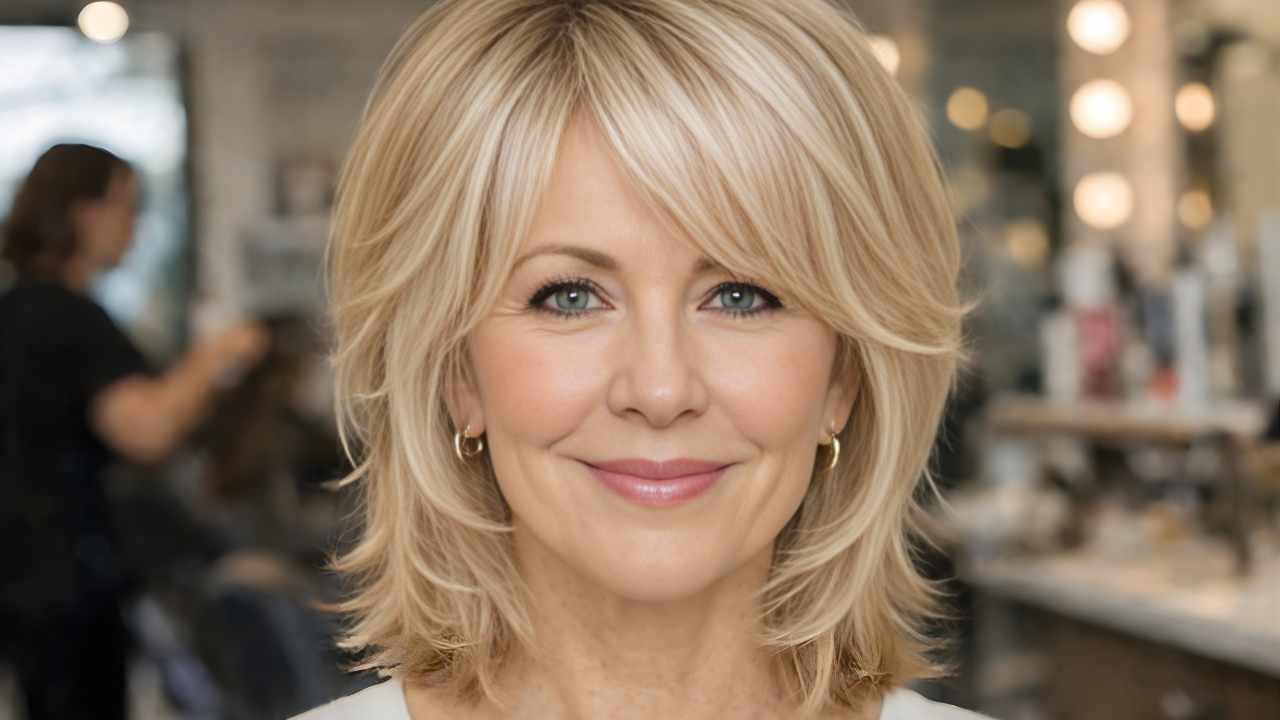
Haircut for Fine Hair: In the quiet atmosphere of a salon, the stylist studies the mirror while holding her scissors carefully. Many women in their 50s sit in that chair with the same concern: their hair feels thinner than it once did. They often say they want more volume but fear that cutting it shorter will only make it look even finer.

Under bright salon lights, the problem becomes more noticeable—flat roots, a sparse crown, and lifeless ends. Yet there is a technique many stylists use to address this issue without creating obvious layers or drastic changes. It’s called invisible layering, and it has become a popular solution for fine hair, especially after the age of 50.

What Is Invisible Layering?
Invisible layering is a subtle haircutting technique designed to add volume and movement without changing the visible outer shape of the hair.
Unlike traditional layered cuts, which remove bulk from the surface and create noticeable steps in the hair, invisible layering works inside the haircut. Stylists carefully remove small amounts of weight beneath the outer layers, creating hidden support that lifts the hair naturally.

The outer surface of the haircut remains smooth and full, while the internal structure gives the hair more movement and body.

Why Fine Hair Needs a Different Approach
Fine hair behaves differently from thicker hair types. Each strand tends to be softer and lies closer to the scalp, which can make it appear flat or lifeless.
Traditional visible layers often make this problem worse. By thinning the ends too much, they can leave the hair looking wispy and fragile.

Invisible layering solves this by focusing on areas where hair typically collapses, such as:
- The crown
- Behind the ears
- Around the nape of the neck
By removing weight internally in these areas, stylists allow the hair to lift more easily while keeping the ends looking full and healthy.
How Invisible Layers Enhance Facial Features
The subtle structure created by invisible layers can also change how the face appears.
When the crown has gentle lift, it can visually raise the face and highlight cheekbones. Fuller ends around the jawline soften facial contours, while light internal shaping near the front can help open up the eyes.
The result often looks natural and refreshed rather than obviously styled. Many people notice that something appears different—but they can’t quite identify what has changed.
A Popular Choice for Women Over 50
Many salon professionals say a large number of clients over 50 request more volume without losing length or appearing overstyled.
Invisible layering helps create this balance. For example, a collarbone-length bob with internal layers can add movement and fullness while maintaining a smooth, polished exterior.
Because the cut looks simple from the outside, it doesn’t appear dramatically different from a classic hairstyle. Instead, it creates a subtle sense of lightness and lift.
Where Stylists Focus When Creating Invisible Layers
When asking for this technique, stylists usually pay special attention to three key areas:
- The crown, where volume is most noticeable
- The occipital bone, the natural curve at the back of the head
- The cheekbone area, where gentle shaping can frame the face
By carefully adjusting the hair’s internal structure, the stylist allows the outer layers to sit higher and appear fuller.
Pairing the Cut With Everyday Styling
One advantage of invisible layering is that it works well with simple styling routines. Many women prefer hairstyles that fit easily into busy mornings rather than requiring complicated blow-drying techniques.
With the right internal structure, even a quick rough dry with your fingers can create natural lift. A small amount of lightweight mousse or root spray applied near the crown can further enhance volume.
Another simple trick is drying the roots in the opposite direction of your natural part. This encourages the internal layers to lift against one another and create fullness.
Common Mistakes to Avoid With Fine Hair
While invisible layering can be very effective, certain cutting and styling habits can reduce its benefits.
Some issues to watch for include:
- Excessive use of thinning shears, which can weaken fine hair
- Over-texturizing the ends, causing them to appear frayed
- Heavy conditioners applied directly to the roots
- Extremely blunt fringes that disrupt balance
Switching to lightweight volumizing conditioners and applying them mainly to the mid-lengths and ends can help maintain lift.
Choosing a Length That Works for You
Many women hold on to long hair because they believe it appears more elegant. However, very long fine hair can sometimes pull the face downward and emphasize thinning.
A slightly shorter length—such as a jaw-length bob or collarbone cut—often creates the illusion of thicker hair while maintaining femininity and movement.
Combined with invisible layering, the result can feel lighter and more youthful without requiring drastic changes.
A Haircut That Works With Real Life
Invisible layering is less about following trends and more about creating a hairstyle that fits everyday life. The technique builds structure inside the haircut so that it continues to look good outside salon lighting—through humidity, long days, and busy mornings.
Many women describe the experience as giving their hair “air” again, restoring movement and softness that seemed lost over time.
The Quiet Power of Subtle Change
A successful haircut doesn’t always need to look dramatically different. Often, the best changes are the ones that simply make you look refreshed and confident.
Invisible layering offers that quiet transformation. By lifting fine hair from within, it helps the hair move naturally while keeping its shape intact.
For women over 50, it provides a thoughtful solution: a hairstyle that feels fuller, lighter, and easier to live with—without losing the sense of familiarity that makes you feel like yourself.